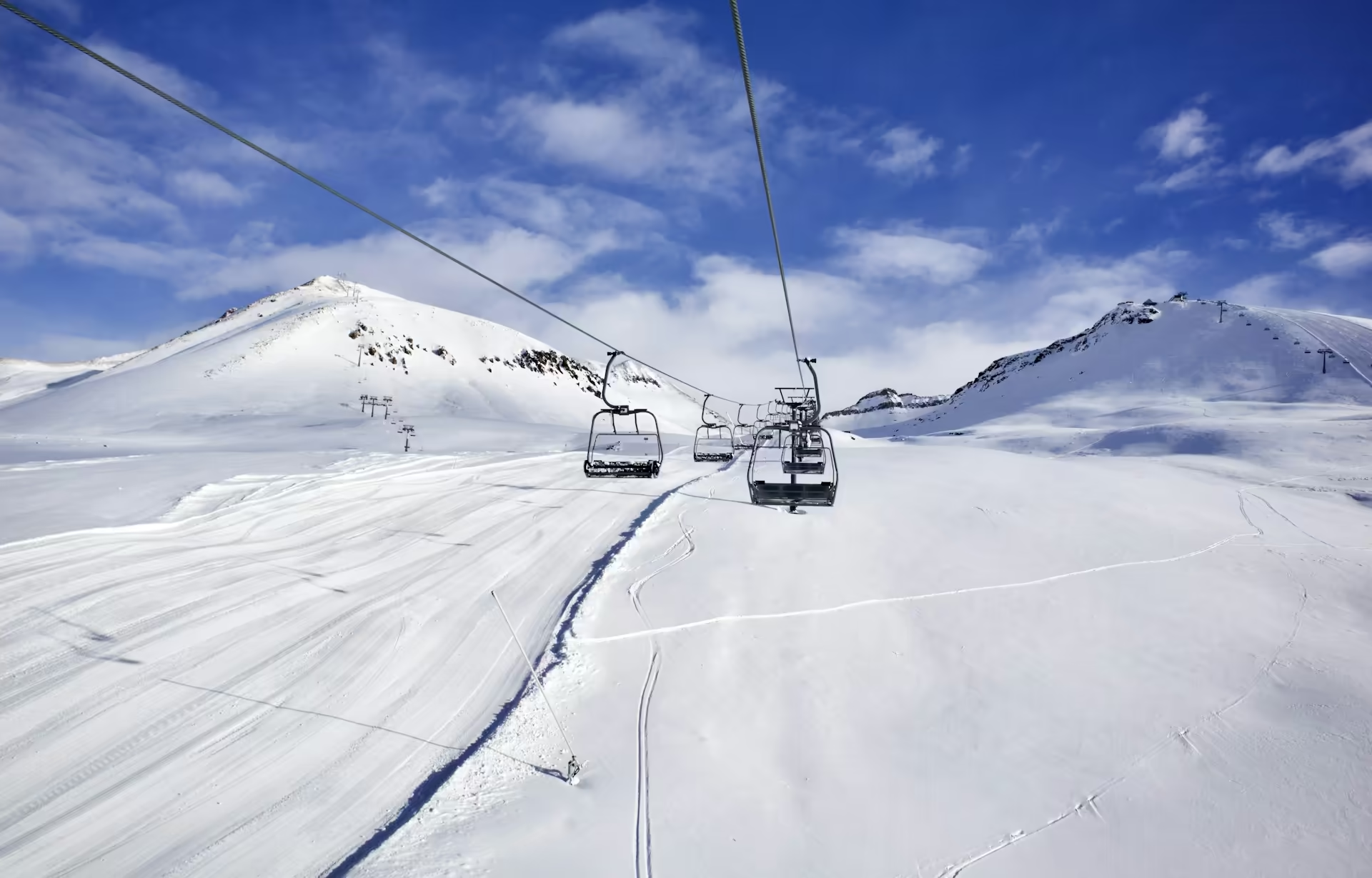
Val Gardena’s lift network features 11 main gondolas, cable cars, and chairlifts connecting three villages (Selva, Ortisei, Santa Cristina) to 181 km of slopes within the Dolomiti Superski area. The five primary lifts—Ciampinoi, Seceda, Dantercëpies, Col Raiser, and Resciesa—provide access to diverse terrain, with direct connections to the famous Sellaronda circuit via Dantercëpies (Orange/Clockwise route) and Ciampinoi (Green/Counter-clockwise route).
The 5 Main Gondolas & Cable Cars
These are your valley-to-mountain workhorses—the lifts that define your day’s skiing strategy.
1. Ciampinoi Gondola (Selva) – The Sellaronda Hub
Rising from Selva’s center to 2,254m, Ciampinoi is the pounding heart of the valley’s ski network. This is where Sellaronda skiers converge, making it one of the busiest junctions in the Dolomites.

Ciampinoi Gondola
€€Selva
Sellaronda Role: Starting point for the Green route (counter-clockwise). From the summit, ski toward Plan de Gralba and follow green signs through Passo Sella to complete the circuit.
Terrain: Black-rated runs including the legendary Saslong World Cup downhill course (839m vertical drop over 3.4 km). The steep Ciampinoi 3 run hosted Giant Slalom events. Not for first-timers.
Strategic Value: Direct access to Piz Sella and the Alta Badia side. Busiest junction in Val Gardena—expect queues during peak morning hours in high season.
Ciampinoi sees the heaviest traffic during peak morning hours as Sellaronda skiers pass through. Arrive early (before the morning rush) to ski the Saslong with fresh corduroy and avoid lift queues.
2. Seceda Cable Car (Ortisei) – The Panorama Peak
Accessible via an underground tunnel from Ortisei center, Seceda is the most photographed mountain face in the Dolomites. At 2,518m, it’s the highest peak accessed directly from the valley floor.

Seceda Cable Car
€€Ortisei
Views: 360° panoramas featuring the jagged Odle peaks. South-facing = perfect morning light in December-January.
Terrain: Wide, sweeping Red runs including La Longia (10.5 km long, 1,283m vertical drop)—one of the longest continuous runs in the Dolomites.
Best For: Intermediate skiers, photographers, and anyone seeking scenic cruising over technical challenges.
3. Dantercëpies Gondola (Selva) – The Valley Connector
Often overshadowed by Ciampinoi, Dantercëpies is the strategic gateway to the Orange Sellaronda route and connects Selva to Passo Gardena.

Dantercepies Gondola
€€Selva
Sellaronda Role: The Orange route (clockwise) starts here. From the summit at Passo Gardena, descend to Colfosco and continue the circuit toward Corvara and beyond.
Terrain: 13 km of predominantly Red intermediate runs with gentler gradients than Ciampinoi. Features the historic Cir slope, which hosted the 1970 World Championships.
Strategic Value: Less crowded than Ciampinoi. Spectacular views of the Sella Group and Sassolungo. If Ciampinoi queues look intimidating, this is your smarter choice.
4. Col Raiser Gondola (Santa Cristina) – The Central Hub
Starting from Santa Cristina, Col Raiser is the strategic middle point connecting Seceda, the Saslong area, and the Monte Pana learning plateau.

Col Raiser Gondola
€€Santa Cristina
Connections: Links to Seceda via mid-mountain runs, or drop into the Saslong race course from above.
Terrain: Mix of Blue and Red runs. Ideal for mixed-ability groups who want to regroup frequently.
Local Secret: The run from Col Raiser down to Santa Cristina is often overlooked and offers excellent skiing away from main traffic.
5. Resciesa Funicular (Ortisei) – The Family Mountain
Departing from Ortisei’s edge, this funicular climbs to the gentle Resciesa plateau—Val Gardena’s dedicated beginner and family zone.

Funicular Resciesa
€€Ortisei
Terrain: Exclusively Blue and Green runs. Wide slopes, gentle gradients, minimal traffic.
Best For: First-time skiers, families with young children, and anyone building confidence before tackling Seceda or Ciampinoi.
Summer Access: Popular hiking starting point with mountain restaurants and playground at the summit.
Additional Strategic Lifts
These lifts expand your options and open up less-traveled terrain:
Alpe di Siusi Gondola (Ortisei)
Gateway to Europe’s largest high-alpine meadow (56 km² plateau). Entirely separate from the main Val Gardena network but included in the local pass.

Alpe Di Siusi Gondola (Mont Sëuc)
€€Ortisei
Why Go: Beginner-friendly terrain, stunning Sciliar massif views, and quieter slopes. Perfect for a “rest day” that still involves skiing.
Alpe di Siusi is technically outside Val Gardena’s main network, which means far fewer skiers. On busy Italian school holiday weekends, it’s your best bet for open slopes.
Saslong Gondola (Selva)
A secondary access point to the Saslong race course area, useful for lap skiing the World Cup runs without descending all the way to Selva.
Saslong Gondola
€€Selva
Piz Sella Cable Car (Selva)
Connects the Ciampinoi summit area to Piz Sella (2,180m), bridging Val Gardena to the Alta Badia side for Sellaronda skiers.

Piz Sella Cable Car
€€Selva
Piz Seteur Gondola (Selva)
Another Sellaronda connector serving the circuit routes. Frequently used by those skiing the Orange route from Plan de Gralba.
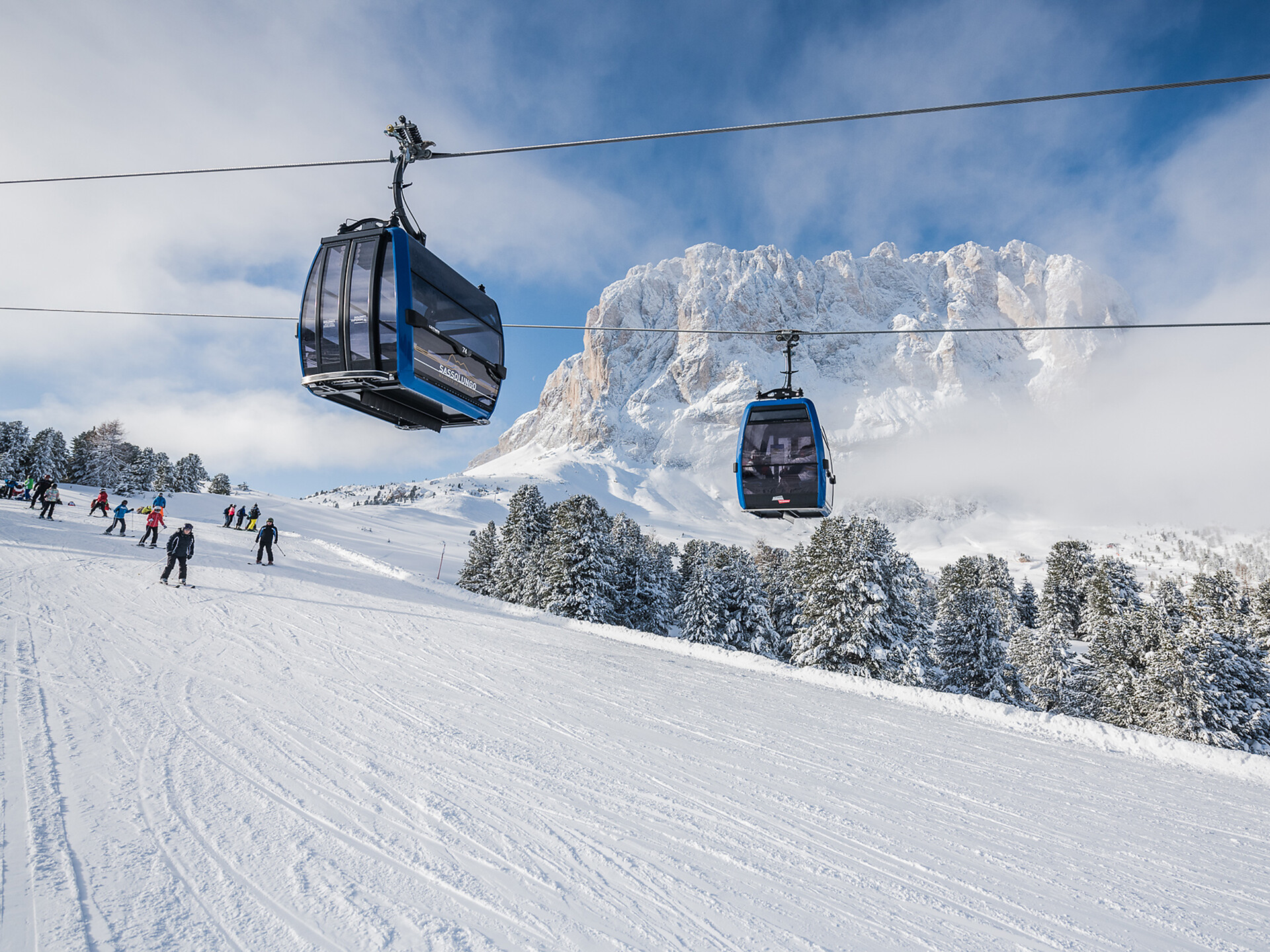
Piz Seteur Gondola
€€Selva
Monte Pana Chairlift (Santa Cristina)
Accesses the sunny Monte Pana plateau—home to Val Gardena’s cross-country ski center and beginner slopes.
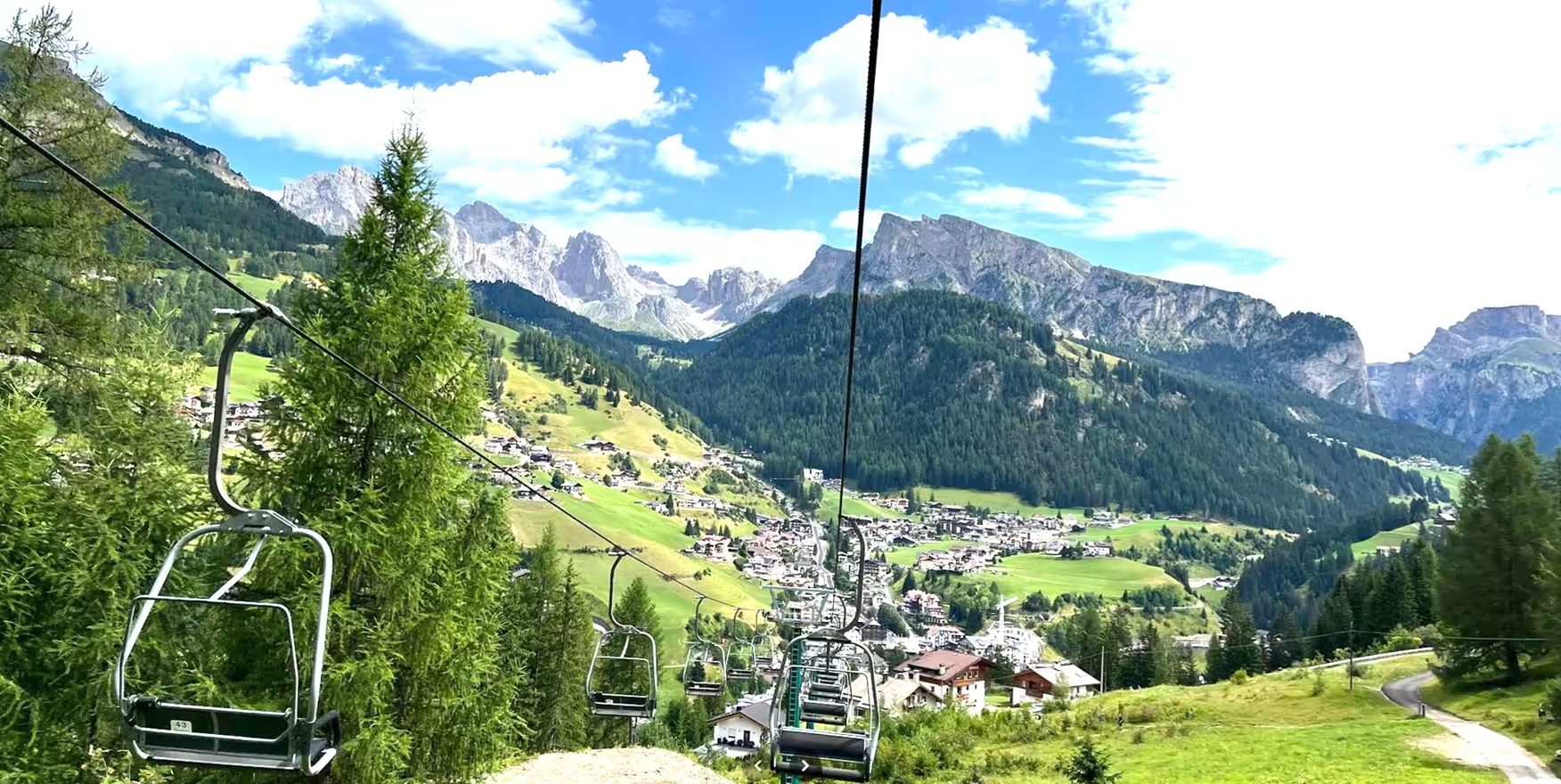
Monte Pana Chairlift
€€Santa Cristina
Best For: Families, cross-country skiers, and anyone seeking mellow terrain with mountain restaurants.
Sasso Levante Chairlift (Selva)
A smaller chairlift serving intermediate terrain on the Sasso Levante ridge.

Sasso Levante Chairlift
€€Selva
Sellaronda Strategy: Which Lifts to Use
The Sellaronda circuit is the crown jewel of Dolomiti Superski—a 40 km loop through four valleys (Val Gardena, Alta Badia, Arabba, Val di Fassa). Here’s which Val Gardena lifts you’ll use depending on your chosen direction:
Orange Route (Clockwise) – The Classic
- Dantercëpies Gondola (Selva → Passo Gardena at 2,121m)
- Descend to Colfosco, then continue via Corvara → Arabba → Canazei → back to Val Gardena
- Follow orange signs throughout the circuit
Why Choose Orange: Features varied slopes and fewer lift rides overall.
Green Route (Counter-Clockwise) – The Snowboarder’s Choice
- Ciampinoi Gondola (Selva → Ciampinoi at 2,254m)
- Ski toward Plan de Gralba, then Piz Seteur chairlift
- Cross Passo Sella and continue via Canazei → Arabba → Corvara → back to Val Gardena
- Follow green signs throughout the circuit
Why Choose Green: Avoids drag lifts entirely, making it ideal for snowboarders. Generally considered slightly easier and more relaxed.
The Sellaronda typically takes 5-6 hours for most skiers (including lift rides and breaks), or about 3 hours for experienced skiers who push hard. Start before 10:00 AM to ensure you finish comfortably before lifts close (typically 16:00-16:30). The Orange route via Dantercëpies tends to be less crowded than the Green route via Ciampinoi.
Beginner-Friendly Lifts: Where to Start
If this is your first ski trip to Val Gardena, stick to these lifts for the first 2-3 days:
- Resciesa Funicular – Safest bet for absolute beginners
- Monte Pana Chairlift – Sunny plateau with ski school areas
- Alpe di Siusi Gondola – Wide-open, forgiving terrain
- Col Raiser Gondola – Good progression once you’ve mastered greens
Avoid: Ciampinoi (too steep, too busy) and Seceda (La Longia is long and tiring for beginners).
Advanced Skiers: Hidden Gems
Once you’ve conquered the Saslong and La Longia, try these less-obvious challenges:
- Ciampinoi 3 Run (Black): Technical, often icy in afternoon—a true test of edge control
- Dantercëpies to Plan de Gralba (Red): Less traffic than Ciampinoi, steeper than it looks
- Sasso Levante Ridge: Quiet intermediate terrain with surprising vertical
Lift Opening Times & Seasonality
Winter Season 2025-2026: December 4, 2025 to April 7, 2026
Operating Hours: Typically 08:30 – 17:00 (varies by month—later opening/earlier closing in December and April)
Sellaronda Full Operation: Early December to early April (weather dependent)
Summer Operations: Select lifts only (Seceda, Col Raiser, Alpe di Siusi, Monte Pana, Dantercëpies). Check official schedules as dates vary—summer season typically runs late June to early October.
High winds can force closure of exposed cable cars (especially Seceda and Piz Sella). Check real-time lift status at valgardena.it or the official Val Gardena app the night before your ski day.
FAQ: Lift Logistics
Q: Which lift has the best views?
A: Seceda Cable Car, hands down. The 360° views from the summit include the Odle peaks, Marmolada glacier, and Sella massif.
Q: Which lift for Sellaronda?
A: Ciampinoi Gondola for the Green (counter-clockwise) route, or Dantercëpies Gondola for the Orange (clockwise) route.
Q: Which lift is best for beginners?
A: Resciesa Funicular from Ortisei. Gentle terrain, minimal traffic, and dedicated ski school areas.
Q: Can I do the full Sellaronda starting from Ortisei?
A: Not directly—you’ll need to take a ski bus to Selva first to access Ciampinoi or Dantercëpies. Ortisei’s main lifts (Seceda, Resciesa) don’t connect to the Sellaronda circuit.
Q: Do all lifts run in summer?
A: No. Only select lifts operate in summer for hiking and biking (Seceda, Col Raiser, Alpe di Siusi, Monte Pana). Check official schedules as summer dates vary.
Final Recommendations
For Your First Day:
Start with Seceda Cable Car for scenic, wide cruising runs. Save Ciampinoi for Day 2 once your legs are warmed up.
For Sellaronda:
Orange route via Dantercëpies = fewer crowds. Green route via Ciampinoi = more direct but busier.
For Families:
Resciesa and Monte Pana offer the safest, sunniest learning environments.
For Powder Hunters:
Skip the main lifts entirely—head to Alpe di Siusi before 09:00 for untouched snow.
