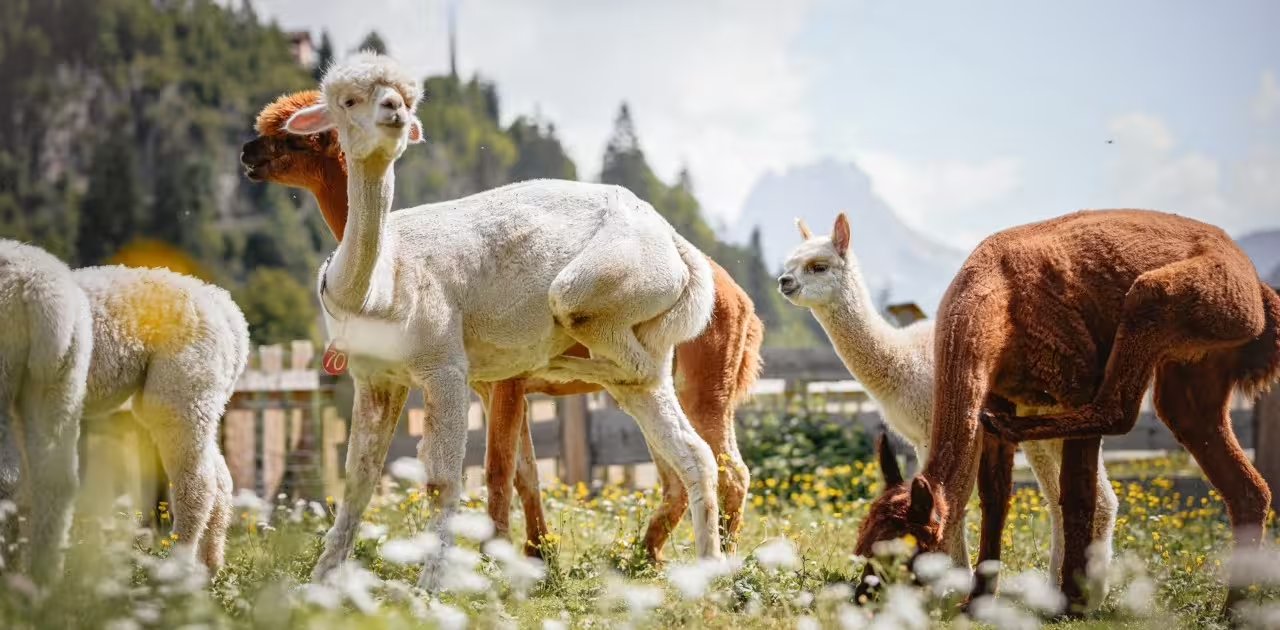
While the Dolomites are famous for their winter sports, the summer months reveal a quieter, deeply agricultural side of the region’s economy. For families and travelers looking to step off the heavily beaten hiking paths, South Tyrolean agritourism offers experiences that rival the mountains themselves.
At the forefront of this is a rather unexpected alpine resident: the alpaca.
The Pioneers of Alpine Alpacas
Tucked away in S. Cristina, Alpaca Val Gardena is not a recent tourist attraction, but one of the first dedicated alpaca breeding farms in Italy. Established in 1999, the farm operates with a strict focus on breeding animals with exceptionally fine, dense fibers. Today, the property is home to a herd of roughly 70 alpacas.
While the primary focus is agricultural, the farm opens its doors to the public during the warmer months, offering one of the most sought-after family activities in the valley.
The Summer Trekking Experience
Unlike a fast-paced hike, an alpaca trek forces you to slow down. The animals dictate the pace as you walk through the UNESCO-protected landscapes.
- The Route: The farm offers guided treks leading to a local waterfall, allowing visitors to experience the scenery at a walking pace alongside their designated alpaca.
- The Details: The standard trek covers approximately 2 kilometers and lasts for about 1 hour and 15 minutes.
- The Cost: The cost for group treks typically ranges between €30 and €45 per person, making it an accessible addition to a family holiday itinerary.
Because this is a working farm focused on animal welfare and breeding, public activities are highly seasonal. The farm’s shop (featuring original Val Gardena alpaca knitwear) and guided tours operate strictly during the summer season (typically from early June through early September). Booking well in advance is highly recommended.
The Hidden Complexity of the Herd
For visitors, the farm offers an idyllic afternoon. But behind the scenes, managing a large herd of camelids in the Italian Alps requires meticulous data tracking.
To produce world-class fleece, breeders must monitor complex genetics, gestation windows, and precise fiber histograms—which measure the average diameter, curvature, and comfort factor of the wool. For years, the founders of Alpaca Val Gardena struggled with generic livestock management systems that failed to account for the unique biological needs of alpacas.
A South Tyrolean Innovation
Frustrated by the lack of adequate tools, the farm leveraged its decades of firsthand experience to build a solution from the ground up.
The result is Alpacakeep, a modern, mobile-friendly herd management software designed strictly for camelid breeders. Built directly from the barns of Val Gardena, the platform is now available to farmers globally, allowing them to track complex fiber data, health records, and pedigrees without leaving the pasture.
When you support local agritourism in the Dolomites, you aren’t just paying for a tour. You are supporting an ecosystem where traditional farming directly funds modern, global entrepreneurship.
